
Description
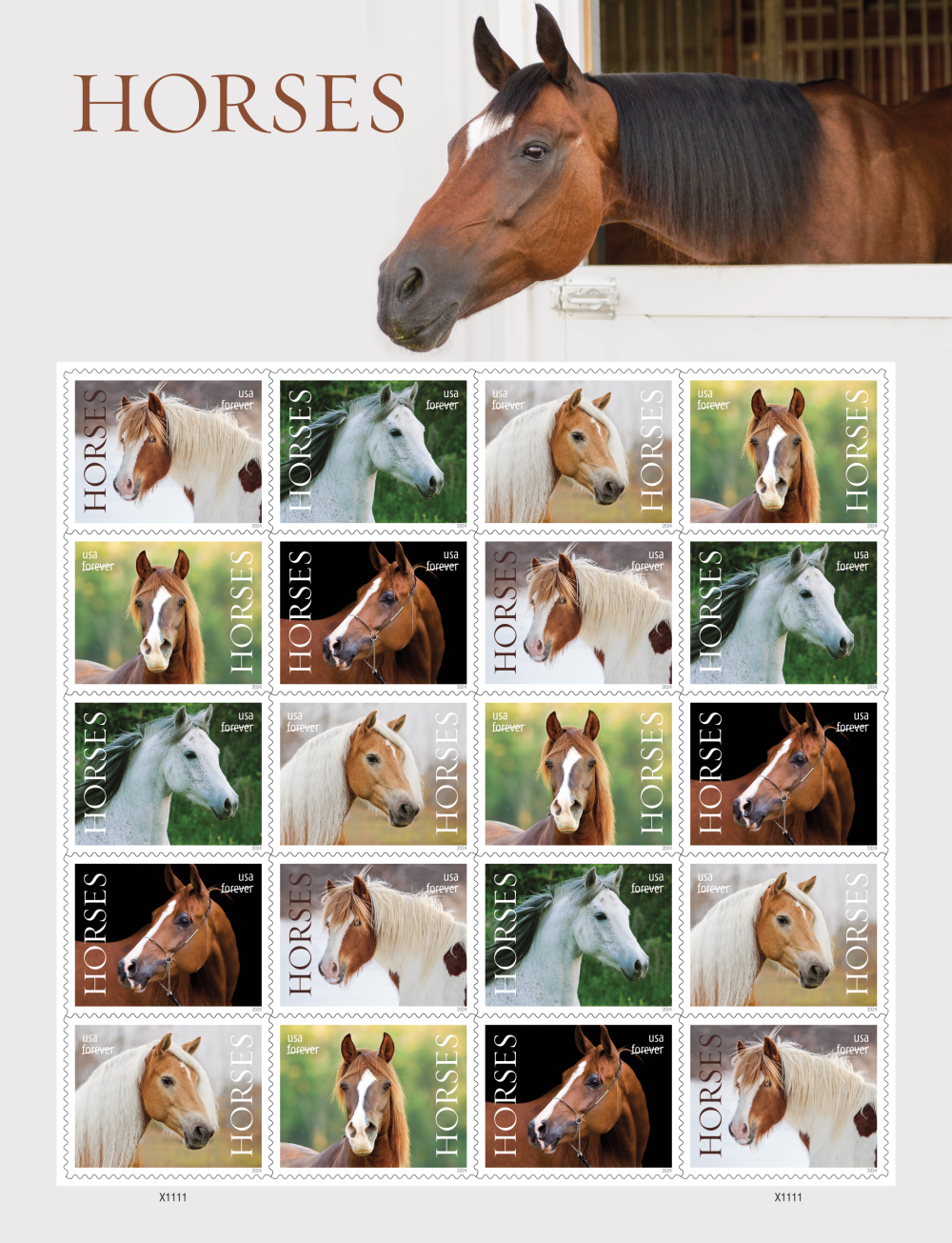
Horses are often just as deserving of the title of humanity’s closest animal companion. Admired for their loyalty, strength, and dependable nature, they have held an important place in American life for generations. Once essential to the nation’s early growth and development, horses are now treasured as companions and continue to play important roles in recreation and sport. This stamp issue celebrates the enduring grace and appeal of these extraordinary animals through five stamp designs.
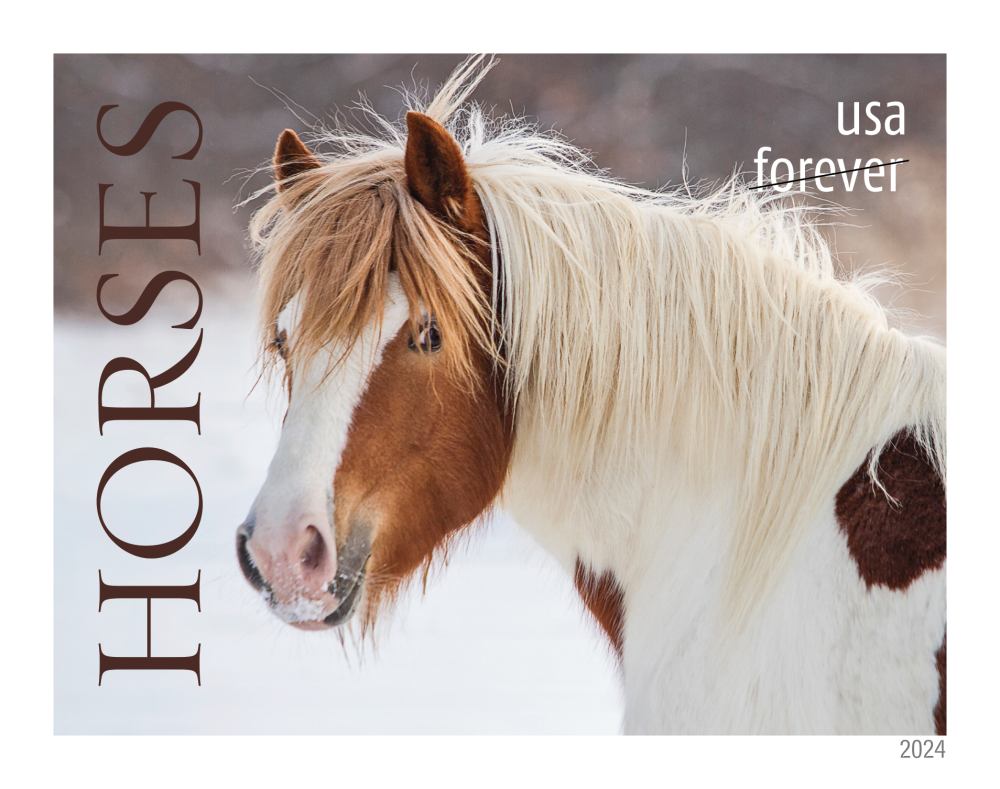
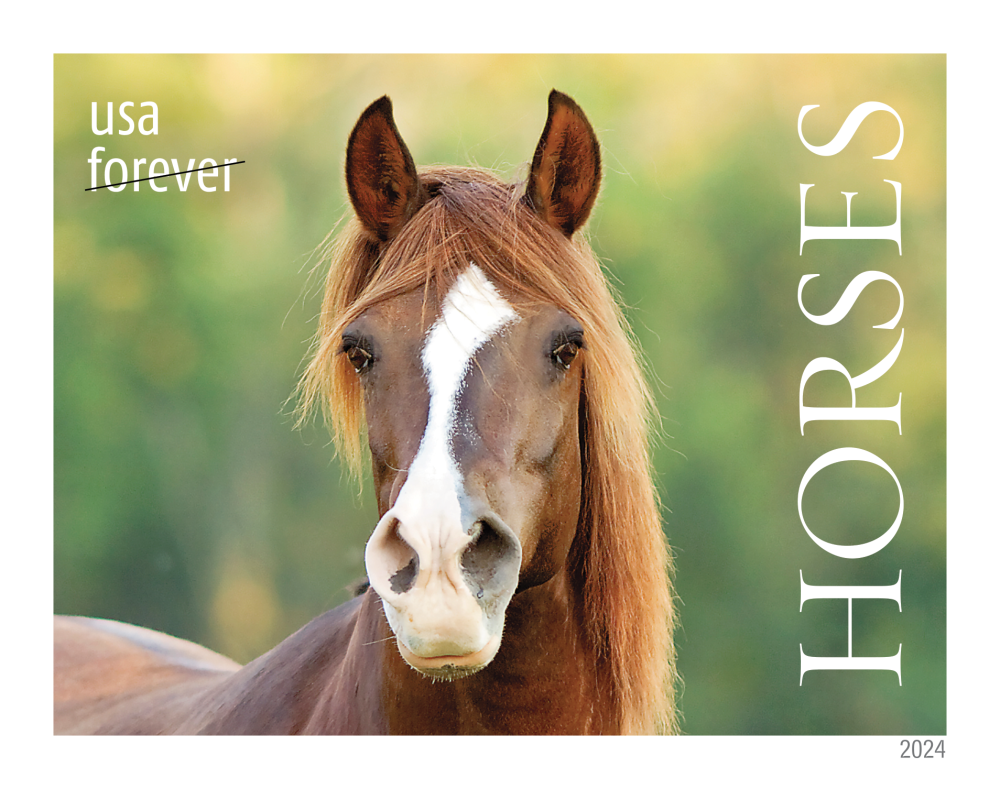
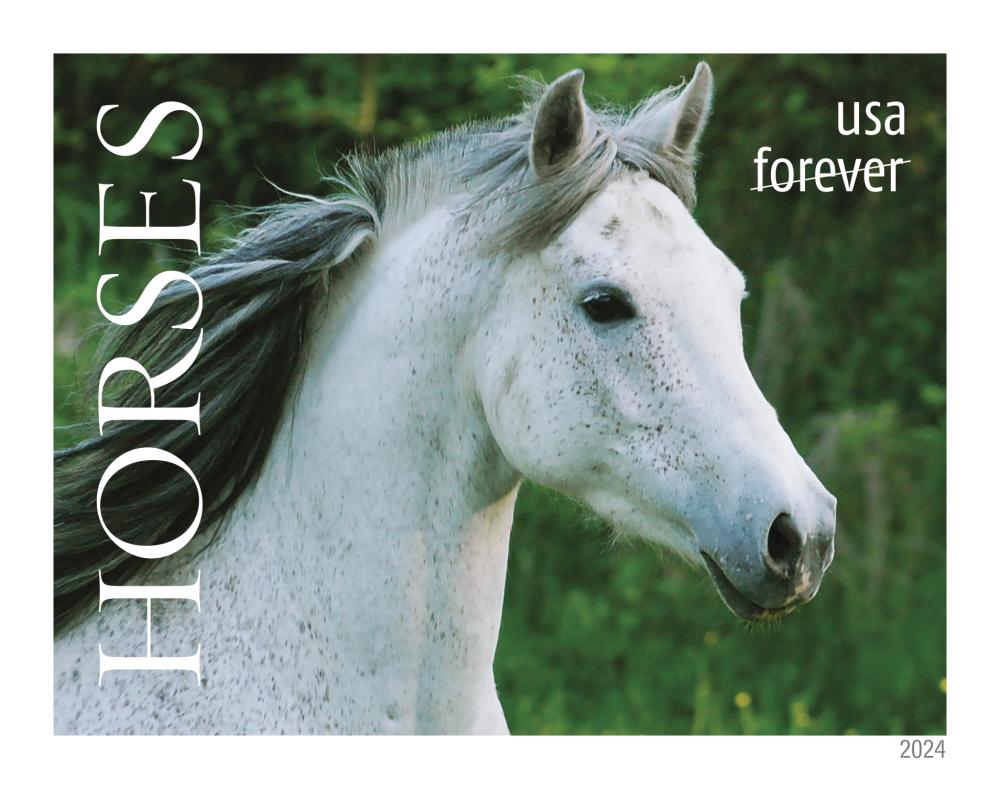
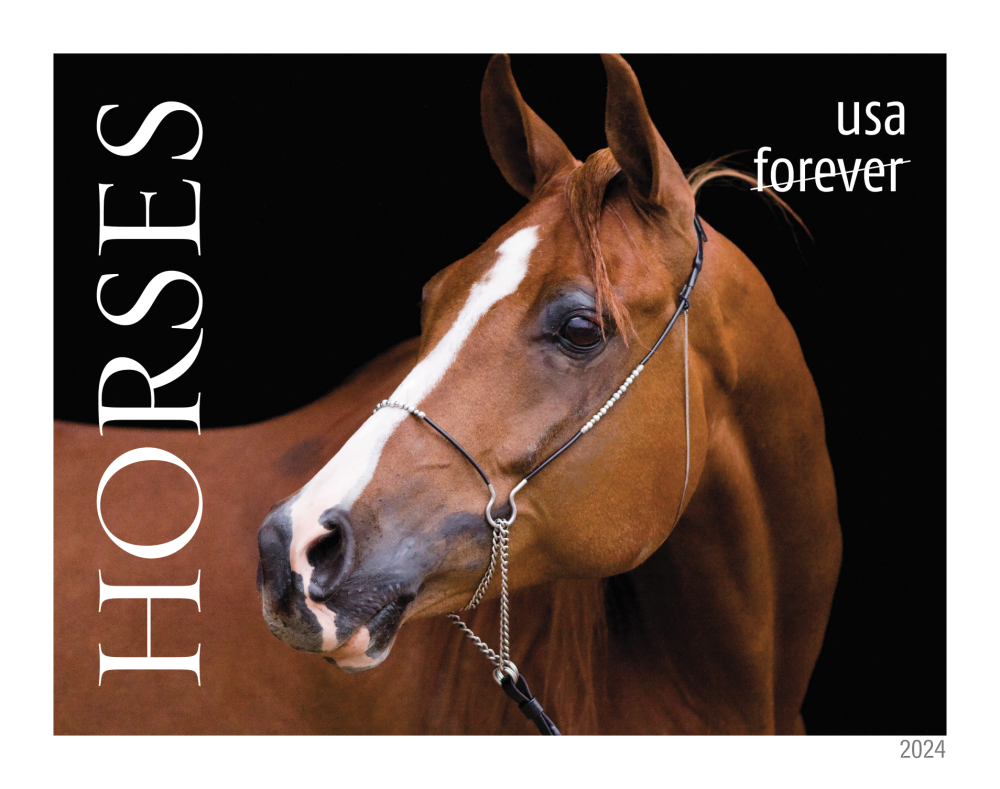
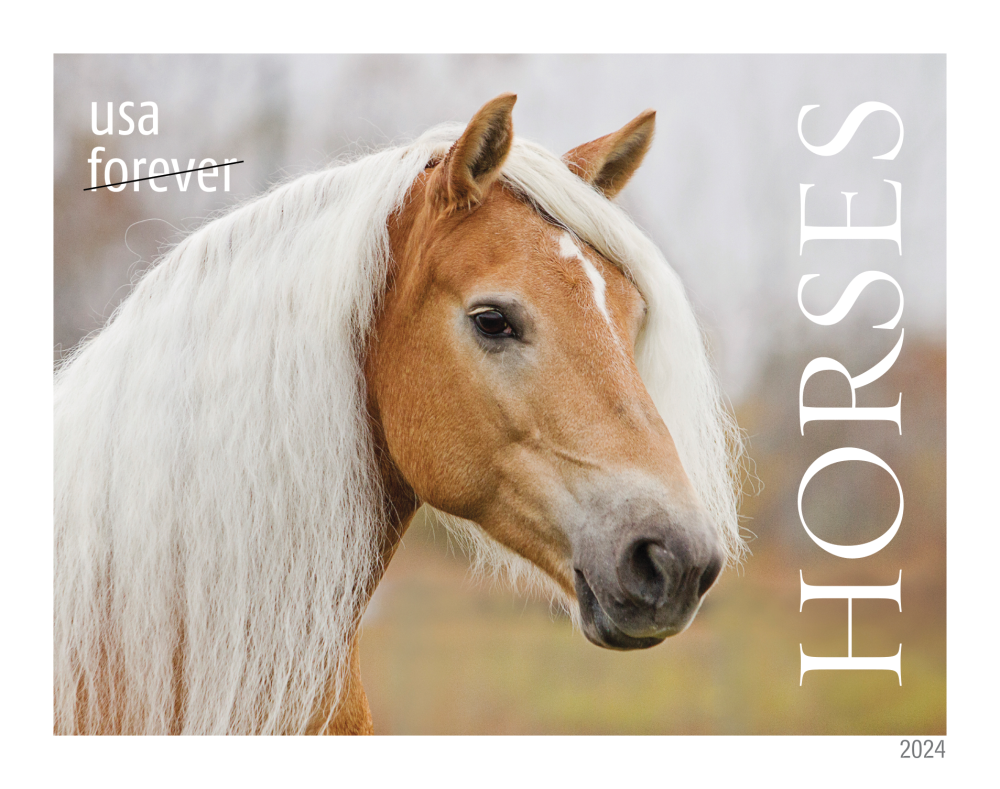
The selvage features a chestnut horse with a black mane and muzzle looking out from the window of a Dutch barn. Three of the stamp images place horses in natural outdoor settings surrounded by green foliage: a dappled white mare with a gray mane; a horse with a russet-colored coat, copper mane, and white markings on its face; and a golden chestnut horse with a pale white mane. Another stamp shows a brown spotted horse with a light mane standing in front of a snowy woodland scene. The fifth design presents a chestnut horse with a white blaze against a plain black background.
The earliest ancestors of today’s horses vanished from North America more than 6,000 years ago, along with other large animals such as the woolly mammoth and the American camel. Horses survived because some had already crossed the Bering land bridge into Asia, allowing the species to continue and eventually return to the Western Hemisphere.
Domesticated horses were reintroduced to the Americas by Spanish conquistadors in the 16th century. These animals played a major role in the conquest of Indigenous peoples in the New World. Many Native American tribes quickly recognized the value of horses, and over time they became deeply woven into tribal life and culture. During the following two centuries, horse use expanded throughout North America’s plains and forests. Breeds including the Quarter Horse, Morgan, American Paint, and American Saddlebred were developed to meet growing needs for riding, carriage pulling, and other specialized tasks.
As the United States grew into a modern country, horses became central to transportation, agriculture, manufacturing, and mining. With the rise of the automobile, their role in transportation began to decline. Continued mechanization and electrification caused the horse industry to shrink further, and by the early 1960s the horse population in the United States had fallen to about three million. Since then, that number has more than doubled. Today, in addition to racing and riding, horses are still used in law enforcement, forestry, entertainment, equine therapy, and cattle work.
The stamps were designed by art director Derry Noyes using existing photographs by Stephanie Moon and Karen Wegehenkel.
Horses stamps are issued as Forever stamps, meaning they remain valid for the current one-ounce First-Class Mail postage rate.



Reviews
There are no reviews yet.